db-Berater GmbH
  • Home
  • Services
  • Workshops 
  • Referenzen
  • Blog
  • Download
  • Kontakt
Seite wählen

Wann Löschvorgänge in HEAPS den allokierten Speicher nicht freigeben

von Uwe Ricken | Dez. 30, 2015 | 300, Administration, DB Engine, Tipps und Tricks

Eine Anfrage im MSDN-Forum von Microsoft mit dem Titel “Issue in shrinking data file” ist der Grund für diesen Artikel. In der Anfrage ging es darum, dass der Fragesteller aus einer sehr großen Datenbank Unmengen von Datensätzen aus diversen Tabellen gelöscht hatte....

Forwarded Records in non-clustered Indexen

von Uwe Ricken | Sep. 9, 2015 | 400, Administration, Indexierung, SQL Blog, Tipps und Tricks

Während der Erstellung eines Artikels für SIMPLE-TALK kam ein sehr interessanter Aspekt in Bezug auf HEAPS in Verbindung mit non-clustered Indexen in den Fokus: „Wird beim Neuaufbau eines non-clustered Index die Position des Forwarded Record im non-clustered...

Temporäre Tabellen vs. Tabellenvariablen

von Uwe Ricken | Juni 15, 2015 | Administration, Allgemein, DB Engine, Indexierung, SQL Blog

Welche Strategie ist am besten geeignet, um Daten, die temporär für weitere Aufgaben benötigt werden, zu speichern und zu verwalten? Mit Microsoft SQL Server 2000 wurden zum ersten Mal Tabellenvariablen als Erweiterung eingeführt. Die Arbeit mit temporären Tabellen...

Initialgröße von Protokolldatei in Verbindung mit SHRINKFILE

von Uwe Ricken | Feb. 6, 2015 | 300, Administration, SQL Blog, Tipps und Tricks

Einen Tag nach der SQL Konferenz in Darmstadt habe ich Zeit gehabt, meine Emails zu bearbeiten. Unter den vielen Emails war eine interessante Frage eines Teilnehmers des SQLSaturday in Slowenien, die sich mit der Größe der Protokolldatei einer Datenbank beschäftigte....

INTERN: Änderung der Größe eines Datenfeldes

von Uwe Ricken | Jan. 2, 2015 | 400, Administration, DB Engine

Auf Grund zahlreicher Emails unter MVP-Kollegen bin ich der Frage nachgegangen, wie sich die Änderung der Größe eines Datenfeldes mit fester Größe auf den Datenkonsum auswirkt. Ein weiterer sehr interessanter Aspekt war der Frage, wie sich die Änderung der Datengröße...

Neue DMF für Aufteilung von Datenseiten

von Uwe Ricken | Nov. 25, 2012 | Administration, DB Engine, Informationen, SQL Blog

Mit Hilfe des undokumentierten Befehls DBCC IND in Verbindung mit dem – ebenfalls undokumentierten – Befehl DBCC PAGE kann man bisher die Aufteilung der Daten in den einzelnen Datenseiten (Pages) analysieren. DBCC IND hat jedoch das Problem, dass die...

Nächste Einträge »

db SQL Blog

  • Forced Parameterization and its Impact on Interleaved Execution
    SQL Server plan cache showing four entries under Forced Parameterization: one compiled plan for the MSTVF demo.get_c_custkey_list_by_nation (objtype = Proc, usecounts = 2), two separate Adhoc entries for the original queries containing the literals 'AUSTRIA' and 'PORTUGAL' (usecounts = 1 each), and one Prepared plan for the automatically parameterized query (usecounts = 2).
  • Why I Don’t Use Query Hints Before Understanding What the Optimizer Is Doing
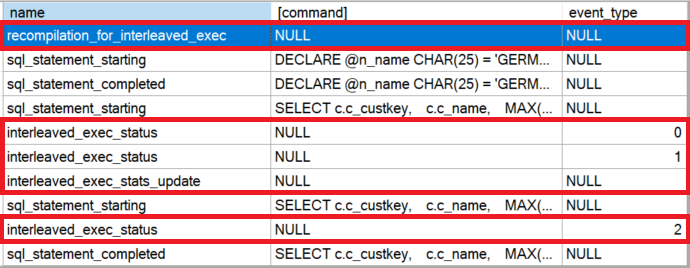
    Extended Events session capturing the lifecycle of Interleaved Execution for a Multi-Statement Table-Valued Function (MSTVF). The trace starts with a recompilation event (recompilation_for_interleaved_exec), followed by statement execution events. Three interleaved_exec_status events document the progression through the Interleaved Execution framework: status 0 indicates eligibility detection, status 1 indicates that SQL Server executes the MSTVF during optimization to obtain actual cardinality information, and status 2 indicates that optimization resumes using the observed row count. The event sequence confirms that SQL Server pauses optimization, executes the MSTVF, and recompiles the query using the actual cardinality returned by the function.
  • Table Variable Deferred Compilation Disabled! So Why Does SQL Server Still Recompile?
  • Interleaved Execution: The Cure for MSTVFs That Never Cured Parameter Sniffing
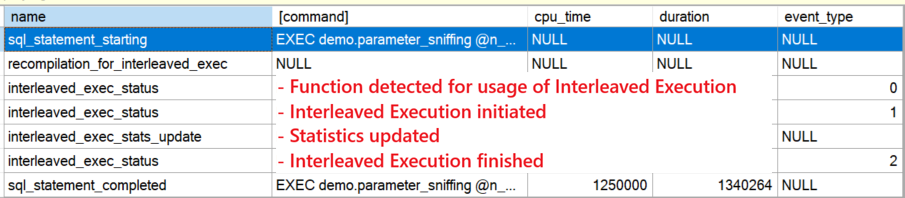
    Extended Events output showing the compilation, execution, and recompilation phases of SQL Server Interleaved Execution for a Multi-Statement Table-Valued Function
  • MSTVFs: Better Estimates, Same Fundamental Problem
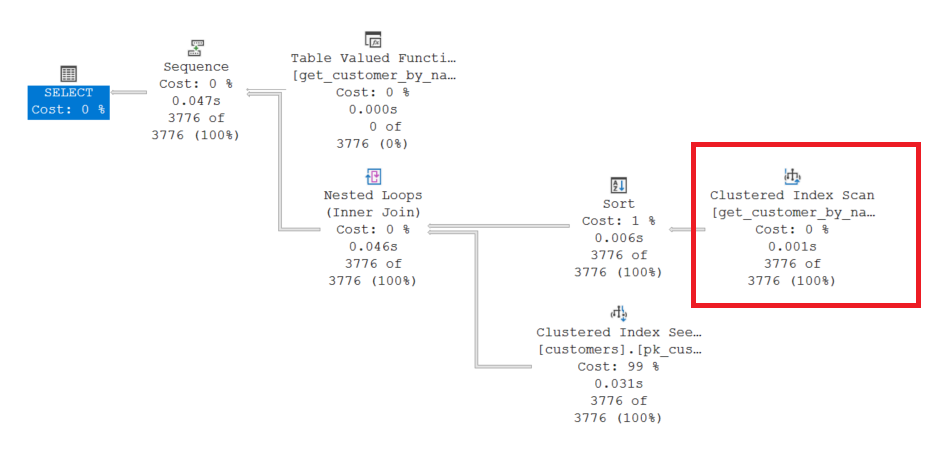
    Execution plan demonstrating Interleaved Execution for a Multi-Statement TVF with accurate cardinality estimation of 3,776 rows.
  • Update Statistics from Replicated Database
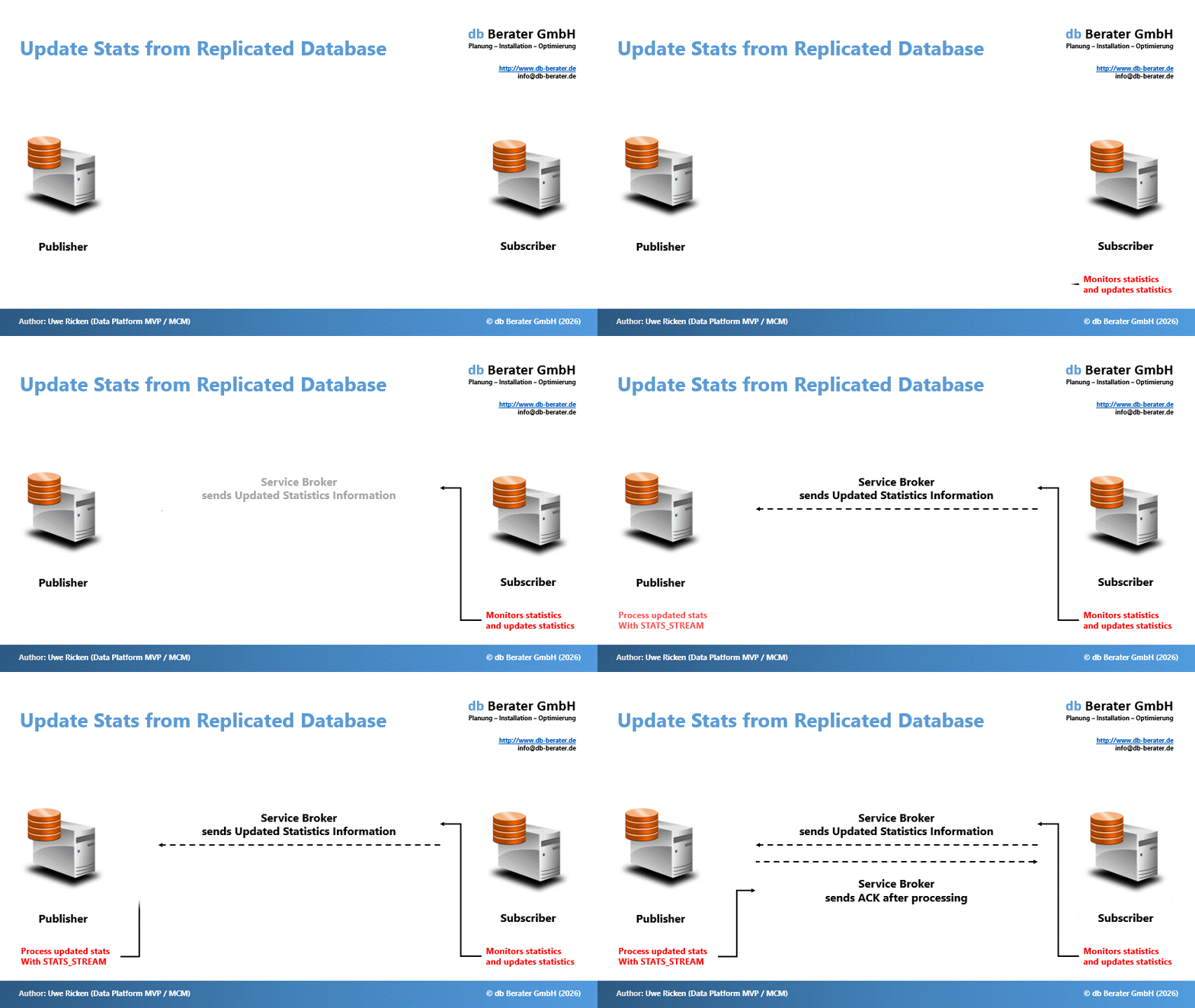
    Infrastructure of automated stats update from a subscriber to a publisher
  • SQL Server Forced Parameterization: When It Improves Performance and When It Doesn’t
  • Nonfoldable User Defined Functions
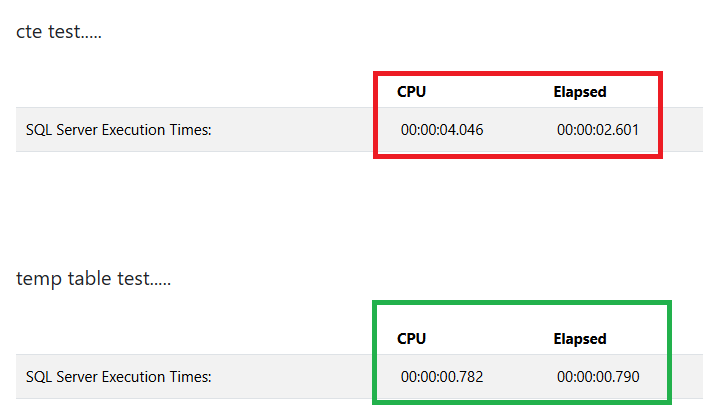
  • CTE vs temp table performance in SQL Server. Hidden costs and real workload impact!
  • Partition a big table with zero downtime
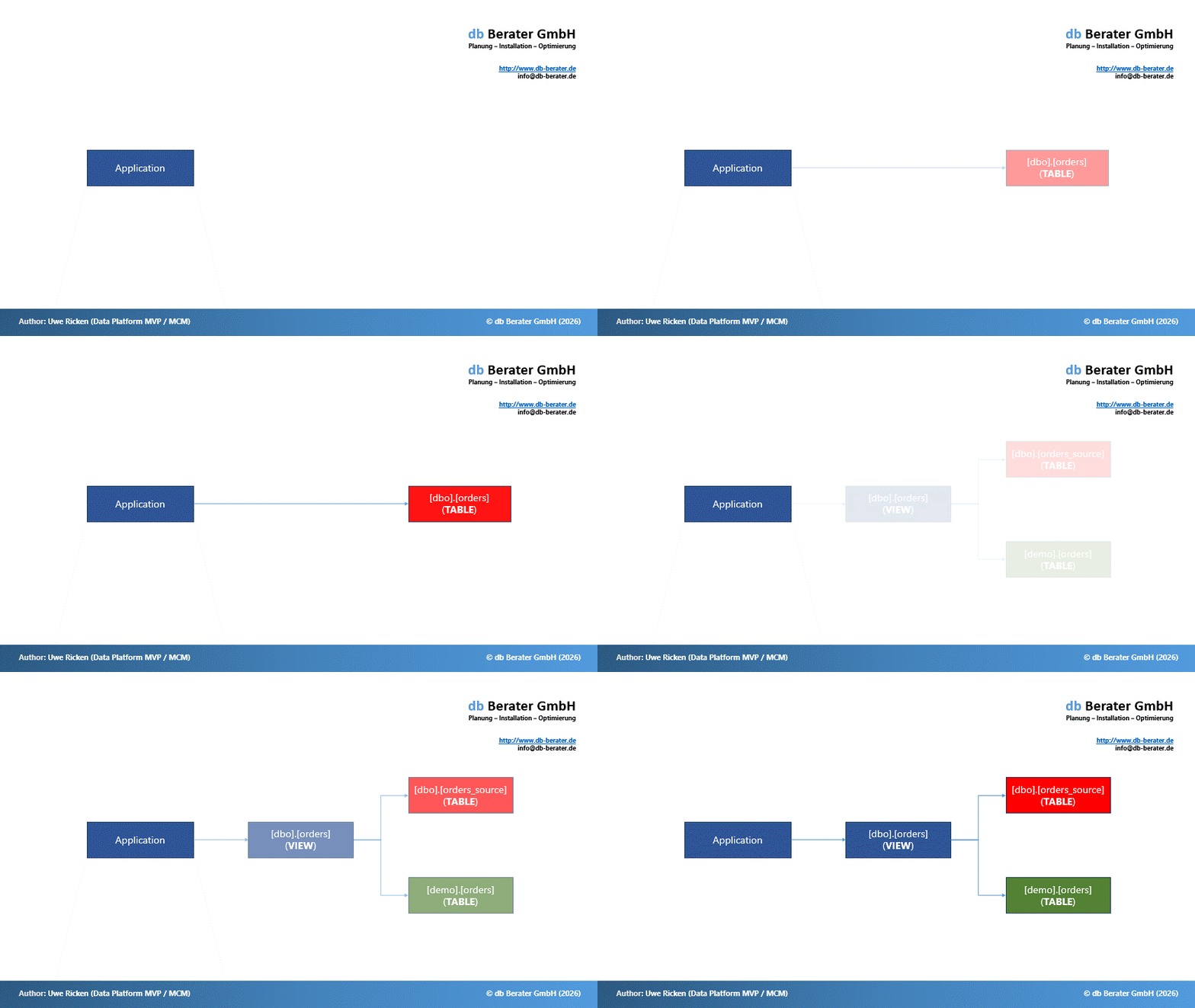
    Data Flow Between Application, Orders View, and Backend Tables
  • WHERE 1 = 1 – good practice?
  • Table Hint UPDLOCK and LOCK ESCALATION
  • Auto Update Statistics and Trivial Execution Plans
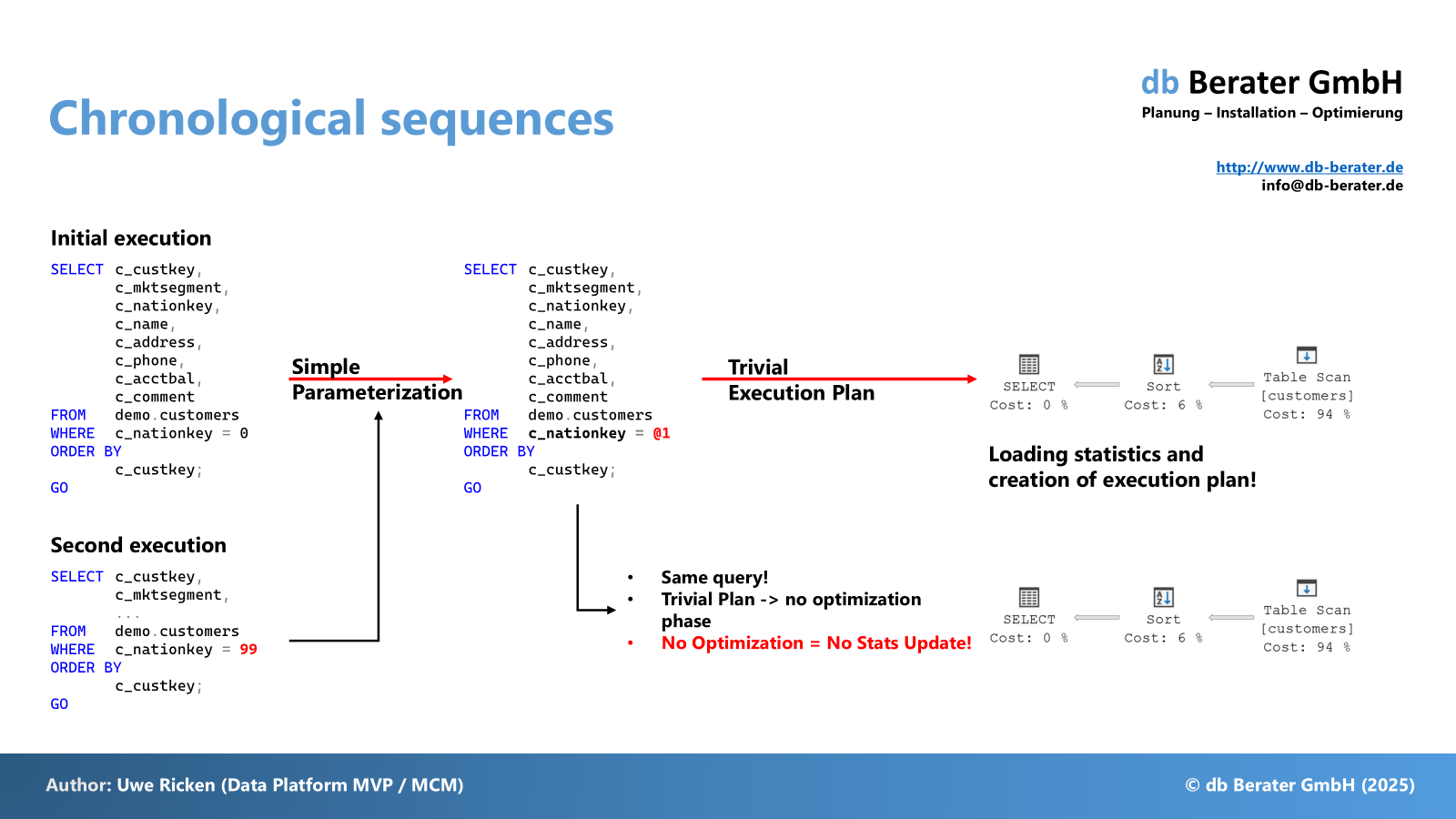
    Execution process of trivial plans with simple parameterization
  • When „Auto Update Statistics“ will not update your statistics
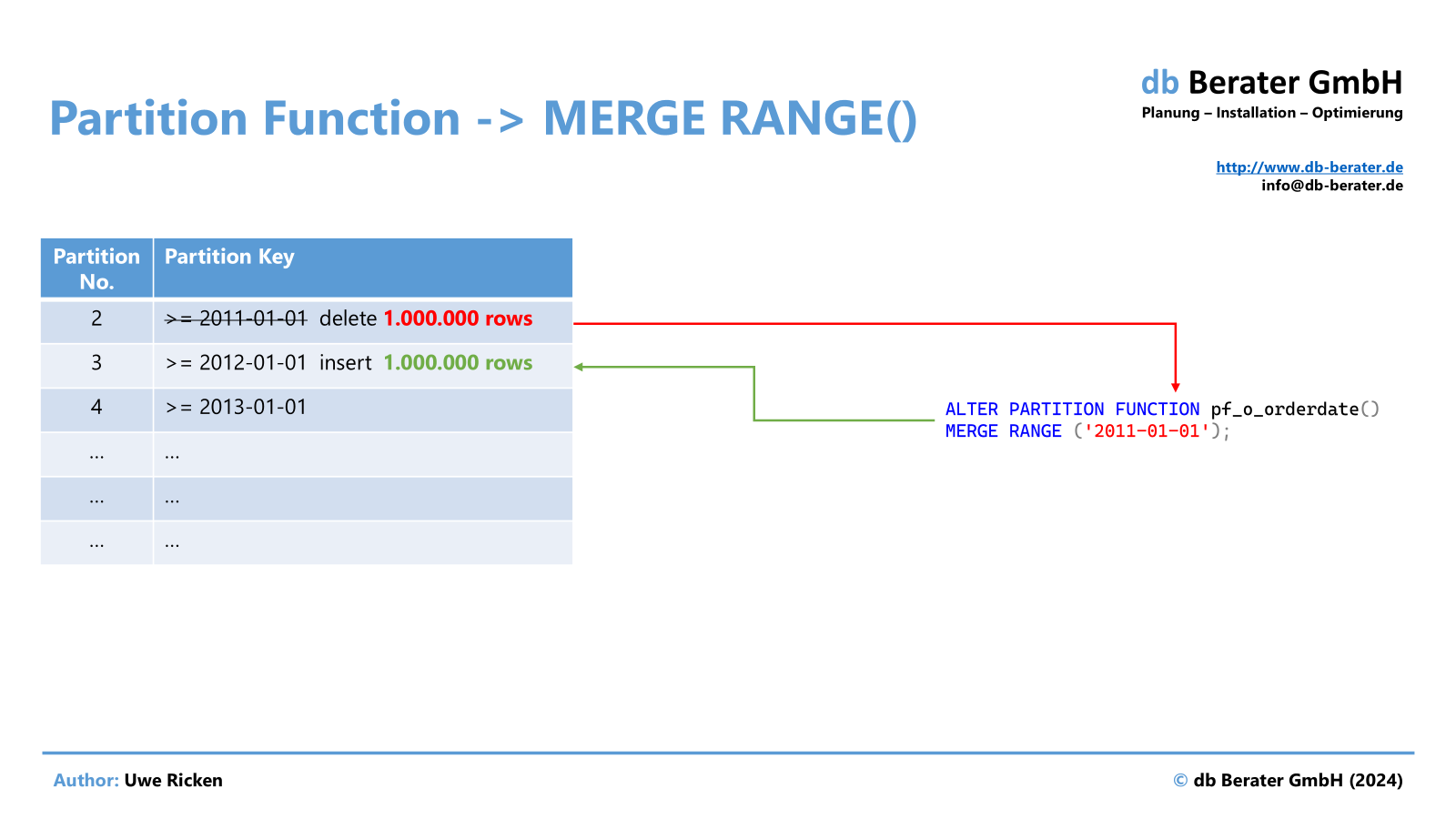
  • Is SWITCH PARTITION a bad idea?
  • Datenschutzerklärung
  • Impressum
  • Sitemap
  • Download
  • RSS

db Berater GmbH | | Büchenweg 4 | 64390 Erzhausen | Phone: +49 (0) 6150 5082955 | E-Mail: info@db-berater.de Amtgericht Darmstadt: HRB86305 |    Umsetzung